

A vaginal discharge is considered abnormal if it occurs in large amounts, is thicker than usual, has an unpleasant smell or if it is accompanied by other vaginal symptoms such as itching or pain.7
Contents
Back to top- WHAT CAUSES AN ABNORMAL VAGINAL DISCHARGE?
- WHAT CAUSES BACTERIAL VAGINOSIS?
- WHAT ARE THE SYMPTOMS OF BACTERIAL VAGINOSIS?
- HOW DO THE SYMPTOMS OF BACTERIAL VAGINOSIS COMPARE TO NORMAL VAGINAL DISCHARGE?
- RISKS OF UNTREATED BACTERIAL VAGINOSIS
- BACTERIAL VAGINOSIS CAN BE TREATED
- IDENTIFYING BACTERIAL VAGINOSIS
WHAT CAUSES AN ABNORMAL VAGINAL DISCHARGE?
Back to topWHAT CAUSES BACTERIAL VAGINOSIS?
Back to topThe vagina is colonised with Lactobacilli, which are bacteria that form part of the normal vaginal environment and these Lactobacilli help to maintain the acidic pH of the vagina.4,11,12 The acidic pH creates a hostile environment for other bacteria, thus keeping infection at bay.11 If the number of Lactobacilli are decreased, the pH of the vagina becomes more alkaline and other bacteria can multiply, which may lead to Bacterial Vaginosis.11 Thus, Bacterial Vaginosis represents a change in the vaginal ecosystem.12
It is not known why some of us get Bacterial Vaginosis more than others. Reports have shown that the bacteria present in the vagina may be influenced by genetics and/or race.11,12 Bacterial Vaginosis is also more prevalent in women who are sexually active or have recently had a change of sexual partner, but other factors have also been identified which may increase the likelihood of getting Bacterial Vaginosis, these include:13,14,15,16
- Douching or use of a vaginal deodorant
- Medicated or perfumed soaps and bath products
- Strong detergents to wash underwear
- Semen in the vagina after unprotected intercourse (semen is alkaline and changes the pH balance in the vagina)
- An intra-uterine contraceptive device
- Smoking
- Being overweight
- Hormonal changes during the menstrual cycle
WHAT ARE THE SYMPTOMS OF BACTERIAL VAGINOSIS?
Back to topBacterial Vaginosis is characterised by these typical signs and symptoms:
- Increased vaginal discharge9
- Thin whitish / grey discharge9
- Fishy odour9
Bacterial Vaginosis tends to produce a milky-white or grey cloudy discharge with an unpleasant musty or fishy smell.9,17 The odour may become stronger after sexual intercourse or after washing with soap, both of which make the pH of the vagina more alkaline, thereby encouraging bacterial growth. 7
HOW DO THE SYMPTOMS OF BACTERIAL VAGINOSIS COMPARE TO NORMAL VAGINAL DISCHARGE?
Back to top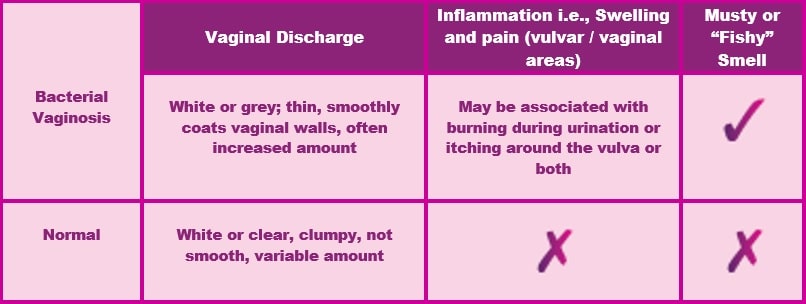
RISKS OF UNTREATED BACTERIAL VAGINOSIS
Back to topIf left untreated, Bacterial Vaginosis may increase your risk of problems and complications.9,14,17
These include:
- Fertility problems
- Complications during pregnancy (e.g. miscarriage or premature birth)14,17
- Increased risk of getting a bladder infection14
- Increased risk of an infection after gynaecological surgery14
- Increased risk of pelvic inflammatory disease9,11
- Easier acquisition of HIV17
BACTERIAL VAGINOSIS CAN BE TREATED
Back to topSpeak to your doctor or pharmacist to assist in the diagnosis of Bacterial Vaginosis. For most women, Bacterial Vaginosis is easily treated with an antibiotic, your doctor or pharmacist would be able to recommend a convenient and effective treatment for you.
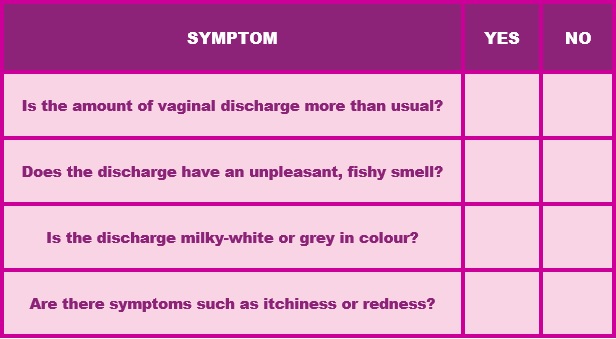
IDENTIFYING BACTERIAL VAGINOSIS
Back to topPlease answer the following questions9,11


Bacterial Vaginosis

Bacterial Vaginosis

Bacterial Vaginosis
Bacterial Vaginosis

Bacterial Vaginosis