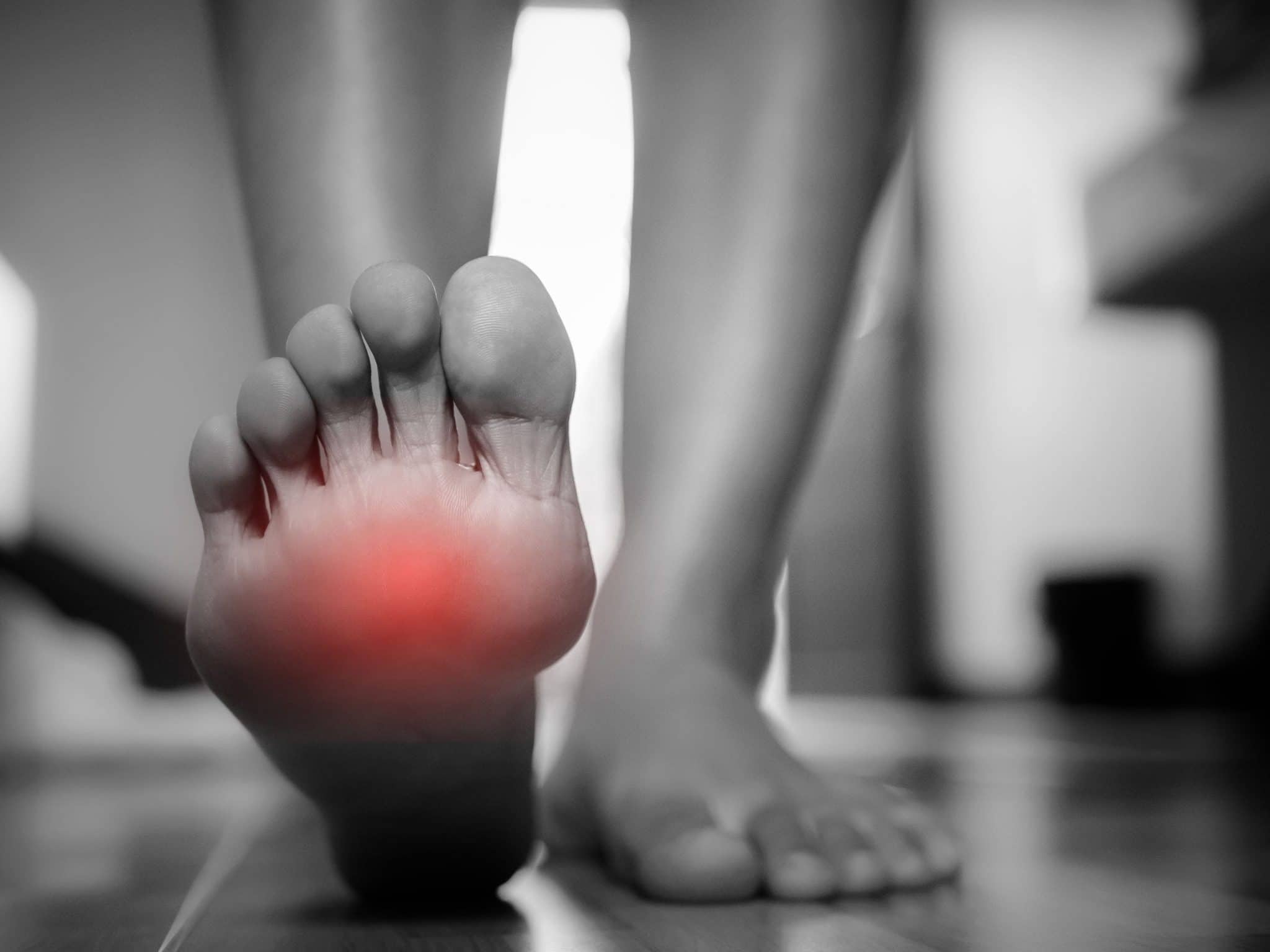

You wake up to a sharp pain in your big toe that feels as though someone has dropped a rock on it. The slightest movement, or lightest contact with the duvet, causes you to wince or cry out. This is what a gout attack feels like.
WHAT IS GOUT?
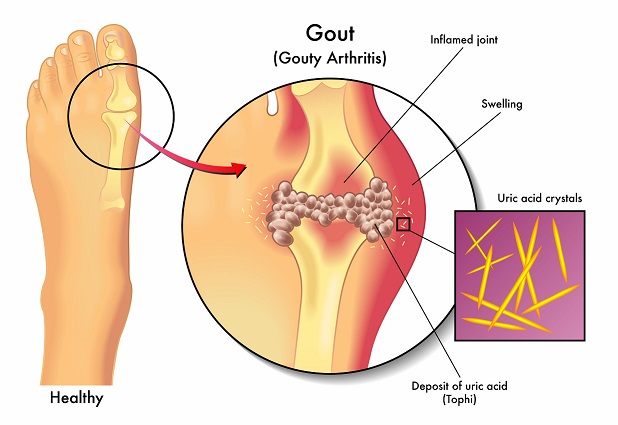
Back to topGout is a form of arthritis sometimes called gouty arthritis. It causes swelling in the joints resulting in discomfort, severe pain and tenderness.1a It can occur in all your joints, particularly those near the end of a limb, such as your hand, wrist, elbow, knee, ankle or foot, but more commonly starting in the big toe.2a
WHAT CAUSES GOUT?
Back to top
HOW GOUT DEVELOPS
Back to topYour liver breaks down purines into waste called uric acid, which is released into your bloodstream.6a The uric acid gets filtered by your kidneys and passed out of your body through your urine.6b If your body makes too much uric acid or cannot get rid of uric acid properly, it builds up in your blood. This causes small sharp crystals to form in and around the joints, which leads to gout.4b
WHO GETS IT?
Back to topGout usually affects middle-aged or older people, men especially, and women after menopause, but occasionally young adults and children get it too.
Risk factors that may increase uric acid levels in your body:
- Family history of gout
- Other medical conditions
- Recent surgery
- Overweight/obese
- Purine-rich diet
- Drinking alcohol
- Certain medications5d, 7a
SIGNS AND SYMPTOMS
Back to top
- Severe joint pain – usually most intense in the first 4 to 12 hours
- The joint feels hot and tender
- Swelling occurs in and around the affected joint
- The skin covering the joint is red and shiny
- Joint stiffness or difficulty moving your joint normally2b, 5e
HOW GOUT IS DIAGNOSED
Back to top
TESTS TO DIAGNOSE GOUT MAY INCLUDE:
Back to top- Joint fluid test which involves taking a fluid sample from the affected joint to examine microscopically for uric acid crystals
- Blood and urine tests to measure uric acid levels in your bloodstream – you may need additional blood and urine tests to check if your kidneys are working properly
- X-ray imaging to rule out other possible causes of joint inflammation1g, 5g
TREATMENT AND PREVENTION
Back to topMore than 50% of people who have a first attack of gout will have a second.1h Untreated gout can cause infection or lead to permanent damage to your joints and kidneys.5h Proper treatment and self-care can prevent permanent damage to your joints.
TO PREVENT GOUT ATTACKS:
Back to top- Limit your intake of alcohol and purine-rich foods
- Follow a healthy diet, exercise and keep your body at a healthy weight
- Drink plenty of fluids, especially water to stay hydrated5i, 7c, 8b

Gouty Arthritis

Gouty Arthritis

Gouty Arthritis
Gouty Arthritis

Gouty Arthritis