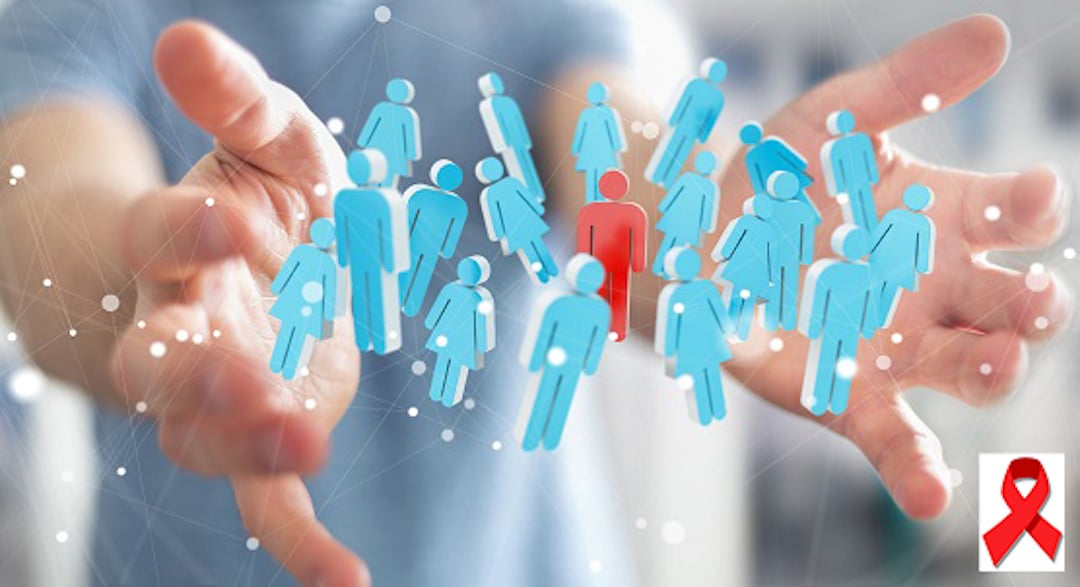

More than 1 million sexually transmitted infections (STIs) are contracted every day all over the world.1a STIs can increase the risk of getting HIV by 3 times or more!1b Learn here how HIV and STIs are linked.
Each year there is an estimated 376 million new infections with 1 of 4 STIs: chlamydia, gonorrhoea, syphilis and trichomoniasis.1a
- STIs can increase the risk of getting HIV by 3 times or more!1b
WHAT ELSE CAN BE DONE?
Back to topInterventions such as male circumcision and vaginal microbicides show some promise in being effective against viral STIs.1j
| Even STIs with no symptoms can cause complications, be transmitted (spread) to sexual partners, and enhance the risk of HIV transmission.4a It is therefore important that all people living with HIV get regularly tested and treated for STIs.4b |
WHAT IS A STI?
Back to topSTI stands for ‘sexually transmitted infection’. This is also called an STD (sexually transmitted disease). STIs are infections that pass from person to person through sex. This includes anal, vaginal or oral sex.2a,3a
Some STIs can also be spread through non-sexual means such as via blood or blood products. Many STIs – including syphilis, hepatitis B, HIV, chlamydia, gonorrhoea, herpes and HPV – can also transmitted from mother to child during pregnancy and childbirth.1h
WHAT CAUSES AN STI?
Back to topSTIs are caused by bacteria, parasites or viruses. HIV is a viral STI. Other examples include chlamydia, gonorrhoea, genital herpes and syphilis.3a
SYMPTOMS MAY INCLUDE:
Back to top- Painful urination
- Painful sex
- Unusual discharge from the vagina or penis
- Fever
- Itching or discomfort in the genital area
Not all people have symptoms and may be asymptomatic. In this instance, STIs can still be transmitted to other people regardless of the presence of symptoms in an infected person.2c
TREATMENT
Back to topUntreated STIs can cause serious complications:3d

WHAT IS THE CONNECTION BETWEEN HIV AND OTHER STIS?
Back to topHere is why:

DID YOU KNOW?
Back to top

- World Health Organisation (WHO) Sexually transmitted infections (STIs) Key Facts; [June 14, 2019]. Available from: https://www.who.int/news-room/fact-sheets/detail/sexually-transmitted-infections-(stis) Last accessed August 2020.
- Mayo Clinic. Sexually transmitted disease (STD) symptoms. [April 30, 2020]. Available at: https://www.mayoclinic.org/diseases-conditions/sexually-transmitted-diseases-stds/in-depth/std-symptoms/ART-20047081?p=1 Last accessed August 2020.
- AIDSINFO, National Institutes for Health (NIH). HIV and Opportunistic Infections, Coinfections, and Conditions. Available from: https://aidsinfo.nih.gov/understanding-hiv-aids/fact-sheets/26/98/hiv-and-sexually-transmitted-diseases Last accessed August 2020.
- National Consolidated Guidelines for the management of HIV in adults, adolescents, children and infants and prevention of mother-to-child transmission. South African National Department of Health, February 2020.

HIV 10 – STIs

HIV 10 – STIs
HIV 10 – STIs
HIV 10 – STIs
HIV 10 – STIs