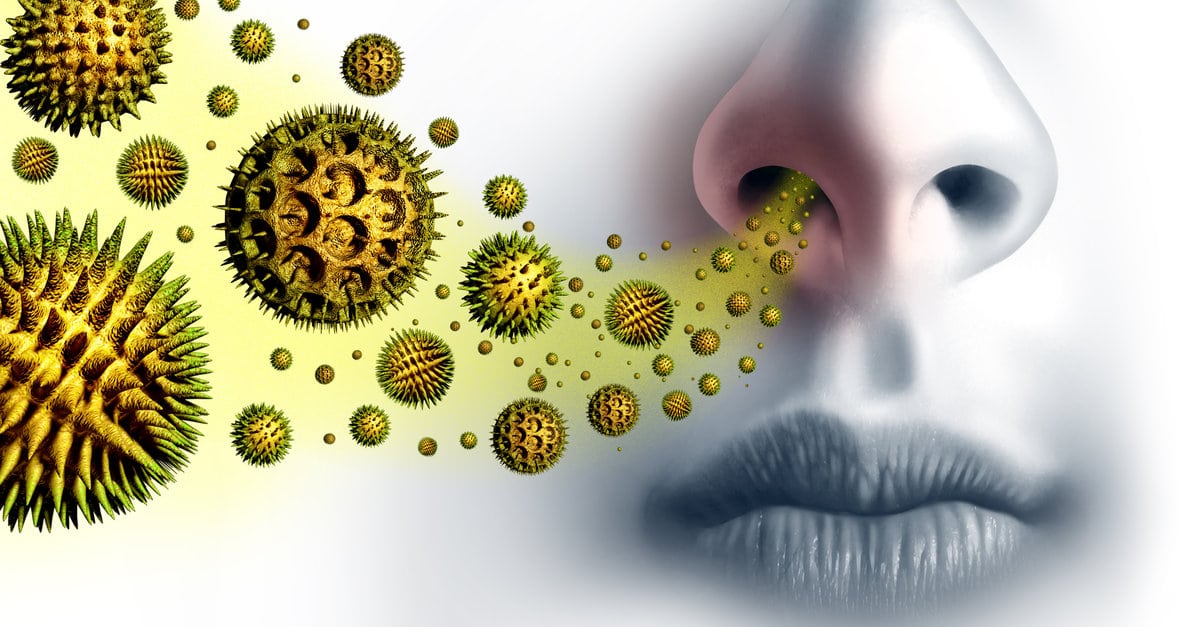

- pollen
- dust mites
- mould
- pet dander
- food
- insect stings
- medicines
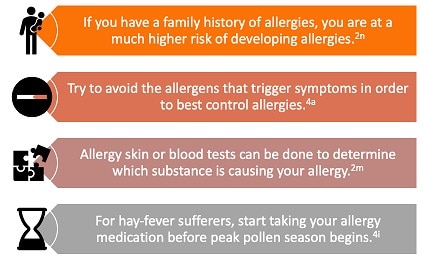
Did You Know? A family history of allergies is the most important factor that puts you at risk of developing allergies.
ALLERGY SYMPTOMS
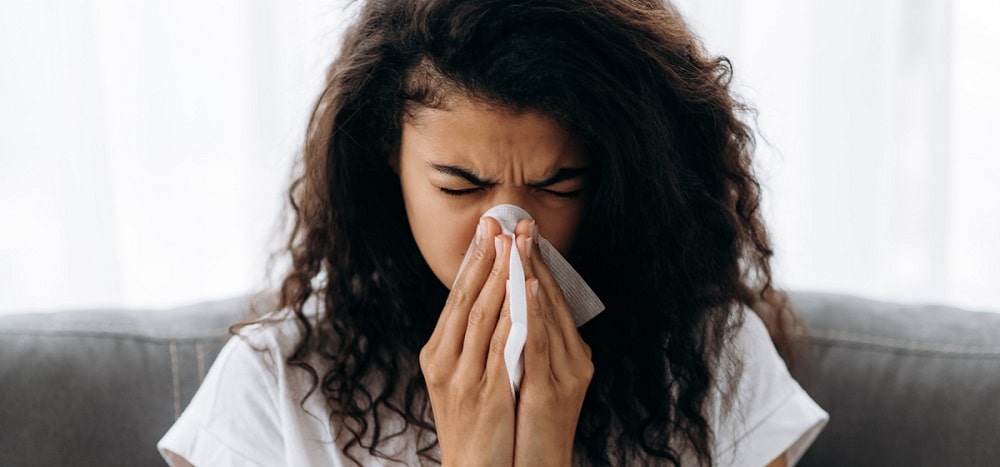
Back to top- a runny nose
- sneezing
- itching
- a skin rash
- swelling
- asthma
ALLERGY AND THE IMMUNE SYSTEM
Back to topThe immune system controls how the body defends itself.2 An ‘allergic reaction’ is the immune system overreacting to a trigger that is usually harmless, like pollen.2
TYPES OF ALLERGY
Back to top- Seasonal allergic rhinitis is commonly called ‘hay-fever’ and typically occurs in spring, summer or autumn.2
- Year-round symptoms may be caused by exposure to indoor allergens such as dust mites, indoor moulds and pets.2
- An itchy, red, bumpy rash usually triggered by certain foods or medications.2
- Eyes react to an allergen by becoming red, itchy and/or swollen.2
Atopic dermatitis or eczema
- When the skin is exposed to an allergen, it reacts by becoming itchy and red with flaking or peeling of the skin.2 Symptoms begin in childhood and can be linked with developing asthma.2
- Asthma is a chronic lung disease with symptoms of coughing, chest tightness, shortness of breath and wheezing. Almost 80 % of people with asthma also have allergic rhinitis2
- Inhaling allergens may cause swelling of the airway and worsen asthma symptoms.2
- The immune system overreacts to a particular protein in a food.
- Common triggers are the proteins found in cow’s milk, eggs, peanuts, wheat, soy, fish, shellfish and tree nuts.2
- This is the most severe allergic reaction which can be life-threatening.2
Anaphylaxis requires immediate medical treatment. If it is not treated properly, anaphylaxis can be fatal.2
The most common anaphylactic reactions are to foods, insect stings, medications and latex.2
WHAT IS THE DIFFERENCE BETWEEN ALLERGIES AND A COLD OR SINUSITIS?
Back to topColds are caused by a virus.3 Allergies are caused by exposure to allergens.3
Colds and allergies can both lead to sinusitis which occurs when the sinuses become swollen and mucous gets trapped, leading to painful pressure and infection.3
TREATING ALLERGY
Back to topThe first rule of managing allergy is avoidance. This may not be possible in many instances! Your doctor or pharmacist may recommend an allergy medication to manage your symptoms effectively.4 These medications may include antihistamines tablets or syrup, nasal corticosteroid sprays, saline sprays or decongestants.4,5
ANTIHISTAMINES
Back to topAntihistamines block the effects of histamine, which is a chemical released by the body during an allergic reaction. By blocking the action of histamine, the allergy symptoms can be reduced.4
Antihistamines come in several different forms – including tablets, syrups, creams, eye drops and nasal sprays.4,6
Which antihistamine is best?
Some antihistamines can cause drowsiness.4 This can be useful if the child or patient needs to sleep, however, if the child attends school (or is an adult in the workplace), this should be avoided.6 In fact, people that operate machinery for work or who are driving should not take sedative antihistamines.6 Newer, non-drowsy antihistamines that are less likely to make you feel sleepy include cetirizine, loratadine and fexofenadine.6
- Medline Plus. Allergy [Online; 15 November 2019] Available from: https://medlineplus.gov/allergy.html Last accessed December 2019.
- American Academy of Allergy, Asthma & Immunology (AAAAI). ALLERGIC REACTIONS. Available at: https://www.aaaai.org/conditions-and-treatments/library/allergy-library/allergic-reactions Last accessed December 2019.
- American Academy of Allergy, Asthma & Immunology (AAAAI). Colds, Allergies and Sinusitis – How to Tell the Difference. Available at: https://www.aaaai.org/Aaaai/media/MediaLibrary/PDF%20Documents/Libraries/EL-allergies-colds-allergies-sinusitis-patient.pdf Last accessed December 2019.
- American Academy of Allergy, Asthma & Immunology (AAAAI). HAY FEVER AND ALLERGY MEDICATIONS. Available at: https://www.aaaai.org/conditions-and-treatments/library/allergy-library/hay-fever-medications Last accessed December 2019.
- Head K, Snidvongs K, Glew S, et al. Saline irrigation for allergic rhinitis. Cochrane Database of Systematic Reviews 2018;6. DOI: 10.1002/14651858.
- Antihistamines [Online; March 7, 2017]. Available at: https://www.nhs.uk/conditions/antihistamines/ Last accessed December 2019.

Allergy

Allergy

Allergy
Allergy
Allergy