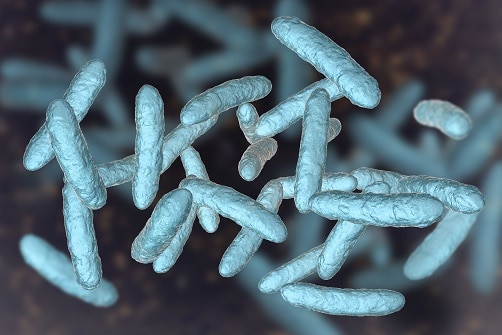

WHAT ARE PROBIOTICS?
HOW DO PROBIOTICS WORK?
Back to topThere is a lot of interest in using probiotics for diseases that might be caused by depletion or alteration of the normal flora. The normal flora plays an important role in protecting the body from invasion by pathogenic bacteria. When the normal flora is disrupted, pathogenic bacteria are more likely to colonise and cause disease. That’s where probiotics come in. Probiotics are thought to help replenish the normal flora and prevent pathogenic bacteria from colonising (increasing in number).1
WHAT ARE THE BENEFITS OF PROBIOTICS?
Back to topProbiotics seem to work against infection in three ways:1
1. Competitive inhibition: probiotics effectively stop disease-causing bacteria from attaching to the lining of the digestive tract (the mucosa). In this way, the bacteria are not able to multiply and cause disease.1
2. Bactericidal effects: lactic acid-producing probiotics such as Lactobacillus and Bifidobacteria are bactericidal, meaning that they kill bacteria.1
3. Immune system stimulation:probiotics seem to boost immunity. Lactobacillus and other probiotics seem to increase the production of antibodies that fight the disease-causing bacteria, thereby stimulating immunity to those bacteria.1
WHAT ARE PROBIOTICS USED FOR?
Back to top- Antibiotic-associated diarrhoea: Research on probiotics overall is largely positive for reducing the risk of diarrhoea related to antibiotic use. Analyses of evidence show that adults and children who take a probiotic along with antibiotics have a reduced risk of diarrhoea by 42% to 47%.2 Both the Lactobacillus species of probiotics and the Bifidobacterium species (including the Bifidobacterium longum strain specifically) display the ability to reduce the risk of this type of diarrhoea.2
- Rotaviral diarrhoea: The Lactobacillus rhamnosus strain of probiotic has been shown to reduce the duration of the diarrhoeal phase of the rotavirus infection by one to three days in infants and young children.2
- General gastrointestinal health: Probiotics are also commonly used for general gastrointestinal health, to maintain regularity, or for their general immunomodulating effects.2They have a very good safety profile in people who are healthy and not immunocompromised.2
INGREDIENT GENERAL HEALTH BENEFIT
Back to top- Contributes to the maintenance of eyesight, skin, membranes and immune function
- Contributes to the development and maintenance of night vision
- Contributes to the development and maintenance of bones and teeth
- A factor in the maintenance of good health
- Helps to metabolise carbohydrates, fats and proteins
- Contributes to normal growth
- Helps to metabolise carbohydrates, fats and proteins
- Contributes to tissue formation
- Helps to metabolise carbohydrates, fats and proteins
- Contributes to tissue formation
- Helps to metabolise carbohydrates, fats and proteins
- Helps to metabolise carbohydrates, fats and proteins
- Contributes to tissue formation
- Helps to metabolise carbohydrates, fats and proteins
- Contributes to normal red blood cell formation
- Helps to metabolise fats and proteins
- Helps in the development and maintenance of bones, cartilage, teeth and gums
- Helps in connective tissue formation
- Helps in wound healing
- An antioxidant for the maintenance of good health
- Helps in the absorption and use of calcium and phosphorous
- Calcium intake, when combined with sufficient vitamin D, a healthy diet and regular exercise, may reduce the risk of developing osteoporosis
- An antioxidant for the maintenance of good health
- Helps the body to metabolise carbohydrates, fats and proteins
- Helps to reduce the risk of neural tube defects when taken daily prior to becoming pregnant and during early pregnancy
- Helps the body to metabolise proteins
- Helps to form red blood cells
- Provides support for healthy glucose metabolism
- Helps the body to metabolise carbohydrates and fats
- Helps to produce and repair connective tissue
- Helps to form red blood cells
- Helps to metabolise carbohydrates, fats and proteins
- Contributes to the development and maintenance of bones and teeth
- Contributes to tissue formation
- Contributes to the maintenance of normal muscle function
- Helps to metabolise carbohydrates, fats and proteins
- Contributes to the development and maintenance of bones
- Helps to metabolise proteins
- An antioxidant for the maintenance of good health
- Helps in connective tissue formation
- Helps to maintain healthy skin
- Helps the body to metabolise carbohydrates, fats and proteins
- Helps to maintain immune function


Cobiotics and Gut Health

Cobiotics and Gut Health

Cobiotics and Gut Health
Cobiotics and Gut Health

Cobiotics and Gut Health