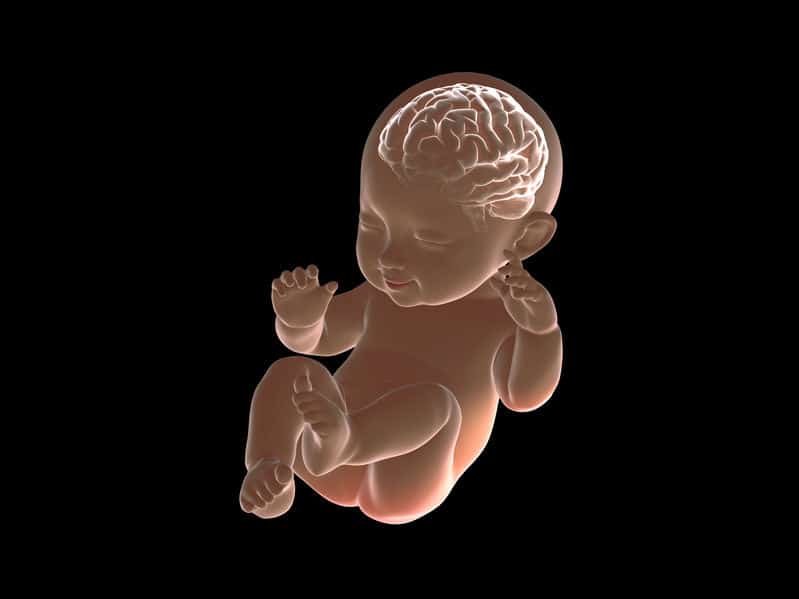

What you feed your child, particularly in the early years, is critically important not just for how the brain develops in childhood but how their brain functions throughout their life.
HOW THE BRAIN DEVELOPS
Back to topThe brain is the most complex organ in the body and, as the control centre of the body, is one of the most important.1a,2a,3 From birth, responding to everything that is going on around him or her, your child’s brain changes shape and size rapidly.1b How well it develops depends on genetics and many other factors including:
⦁ Exposure to toxins or infections
⦁ Interaction with other people and their environment
⦁ What they eat 1c
DURING PREGNANCY
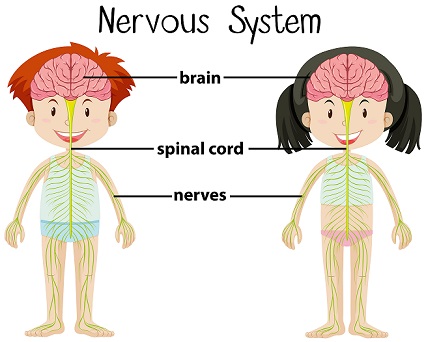
Back to topIn the early days of pregnancy, your baby’s nervous system starts to form. From it the brain and spinal cord develop. By the end of pregnancy, the brain has grown significantly. It is able to learn and can even form memories.4
AT BIRTH
Back to topAt birth, your infant has all of the neurons (brain cells) they will ever have throughout their lifetime. Growing quickly from birth to age three, the human brain produces more than a million neural connections each second.5
The brain of a two-year old child is about 80% of the size it will become when he or she is an adult. By age five the brain is 90% fully developed. 6
These neural connections help to create the systems that determine how your child – and the adult he or she becomes – thinks, feels and behaves.7a Neural connections influence sensory perception (eyesight, hearing, touch, taste, smell and balance), learning, memory, attention, and the speed at which your child processes things, their ability to control impulses and mood, and the ability to multitask or plan.7b

NUTRITION THE BRAIN NEEDS TO LEARN AND GROW
Back to topAt weaning stage, usually 4-6 months or so, your infant’s brain grows and develops quickly, so he or she needs enough of the right kind of food for their brain to develop properly.8a
A weaned infant is a baby that takes food from a source other than from the mother’s breast, either formula from a bottle or semi-solid foods.9,8b
Not getting enough nutrient-rich foods early in life can result in brain function deficiencies that cannot be reversed. These may include cognitive intelligence (how your child thinks, remembers, rationalises and problem solves), behavioral problems, and learning issues at school such as memory and concentration.2b
NUTRIENT-RICH INFANT BRAIN FOODS
Back to topFoods containing nutrients that are important for early brain development include:
⦁ Protein – meat, poultry, oily fish (wild salmon, cod, trout, mackerel, sea bass), chicken, turkey, tofu, eggs, yogurt, beans, lentils, grains, peanut butter
⦁ Zinc – beef, pork, milk, tofu, kidney beans, peas, lentils, yoghurt
⦁ Copper – mushrooms, shellfish, whole grains, beans, sweet potatoes, blueberries
⦁ Iron – beef, chicken, fish, fortified cereal (vitamin and mineral enriched), beans, leafy greens (such as spinach, kale, broccoli), green peas, avocado
⦁ Selenium – oily fish, chicken, enriched pasta, eggs, brown rice
⦁ Choline – beef, poultry, eggs, white fish, oily fish, lima beans, fortified cereal
⦁ Folate – spinach, orange juice, enriched rice, avocado, whole wheat bread, leafy greens, blueberries
⦁ Iodine – cod, table salt, milk, prawns, egg, canned tuna
⦁ Vitamin A – oily fish, sweet potatoes, carrots, cantaloupe, mangoes, eggs, milk, leafy greens
⦁ Vitamin D – mushrooms exposed to UV light (see packaging), oily fish, tuna, milk, fortified non-dairy milks and juice, avocado
⦁ Vitamin K – leafy greens, green peas, blueberries, avocado
⦁ Vitamin B6 – fortified cereal, chickpeas, bananas, sweet potatoes, oily fish, peanut butter, avocado, leafy greens, blueberries
⦁ Vitamin B12 – fortified cereal, oily fish, milk, beef, oily fish, yogurt, cheese, avocado
⦁ Essential fatty acids – oily fish, canola oil, flaxseed, sunflower2c,10
⦁ Protein – meat, poultry, oily fish (wild salmon, cod, trout, mackerel, sea bass), chicken, turkey, tofu, eggs, yogurt, beans, lentils, grains, peanut butter
⦁ Zinc – beef, pork, milk, tofu, kidney beans, peas, lentils, yoghurt
⦁ Copper – mushrooms, shellfish, whole grains, beans, sweet potatoes, blueberries
⦁ Iron – beef, chicken, fish, fortified cereal (vitamin and mineral enriched), beans, leafy greens (such as spinach, kale, broccoli), green peas, avocado
⦁ Selenium – oily fish, chicken, enriched pasta, eggs, brown rice
⦁ Choline – beef, poultry, eggs, white fish, oily fish, lima beans, fortified cereal
⦁ Folate – spinach, orange juice, enriched rice, avocado, whole wheat bread, leafy greens, blueberries
⦁ Iodine – cod, table salt, milk, prawns, egg, canned tuna
⦁ Vitamin A – oily fish, sweet potatoes, carrots, cantaloupe, mangoes, eggs, milk, leafy greens
⦁ Vitamin D – mushrooms exposed to UV light (see packaging), oily fish, tuna, milk, fortified non-dairy milks and juice, avocado
⦁ Vitamin K – leafy greens, green peas, blueberries, avocado
⦁ Vitamin B6 – fortified cereal, chickpeas, bananas, sweet potatoes, oily fish, peanut butter, avocado, leafy greens, blueberries
⦁ Vitamin B12 – fortified cereal, oily fish, milk, beef, oily fish, yogurt, cheese, avocado
⦁ Essential fatty acids – oily fish, canola oil, flaxseed, sunflower2c,10

THE IMPORTANCE OF ESSENTIAL FATTY ACIDS (EFAS)
Back to topn the first year of an infant’s life, up to 50% of their calorie intake should come from fat gradually reducing it at age two.11a Not just any fat, but unsaturated fats, particularly long-chain polyunsaturated fats, also referred to as essential fatty acids because, your brain and body cannot grow and function properly without them.11b
During breast feeding: your infant receives essential fatty acids through breastmilk (which is 50% fat).
During pregnancy: a developing baby receives essential fatty acids from its mother through the blood that supplies the placenta. The placenta is an organ in the womb that nourishes the developing foetus through the umbilical cord.
During the first two years of your child’s life: brain growth is particularly rapid. About 30% of the dry weight of the brain and eye is made up of essential fatty acids, so once breastfeeding slows down or stops it is important to ensure that your baby does not become EFA deficient – all the more reason to consider a natural supplement.
During breast feeding: your infant receives essential fatty acids through breastmilk (which is 50% fat).
During pregnancy: a developing baby receives essential fatty acids from its mother through the blood that supplies the placenta. The placenta is an organ in the womb that nourishes the developing foetus through the umbilical cord.
During the first two years of your child’s life: brain growth is particularly rapid. About 30% of the dry weight of the brain and eye is made up of essential fatty acids, so once breastfeeding slows down or stops it is important to ensure that your baby does not become EFA deficient – all the more reason to consider a natural supplement.
Please note: This is educational information only and should not be used for diagnosis. For more information on nutrition and infant brain development, consult your healthcare professional.


Nutrition and Baby Brain Development
What you feed your child, particularly in the early years, is critically important not just for how the brain develops in childhood but how their ....

Nutrition and Baby Brain Development
What you feed your child, particularly in the early years, is critically important not just for how the brain develops in childhood but how their ....

Nutrition and Baby Brain Development
What you feed your child, particularly in the early years, is critically important not just for how the brain develops in childhood but how their ....
Nutrition and Baby Brain Development
What you feed your child, particularly in the early years, is critically important not just for how the brain develops in childhood but how their ....

Nutrition and Baby Brain Development
What you feed your child, particularly in the early years, is critically important not just for how the brain develops in childhood but how their ....

Nutrition and Baby Brain Development
What you feed your child, particularly in the early years, is critically important not just for how the brain develops in childhood but how their ....