

A woman’s nutritional status during pregnancy and breastfeeding is not only critical for her health but also for her baby.
THE IMPORTANCE OF PRE-AND POSTNATAL SUPPLEMENTATION
Back to topA woman’s nutritional status during pregnancy and breastfeeding is not only critical for her health but also for her baby. During pregnancy, women undergo several physiological changes that require increased nutritional requirements to achieve the normal development and health of the fetus. These changes also prepare the mother and baby for delivery.
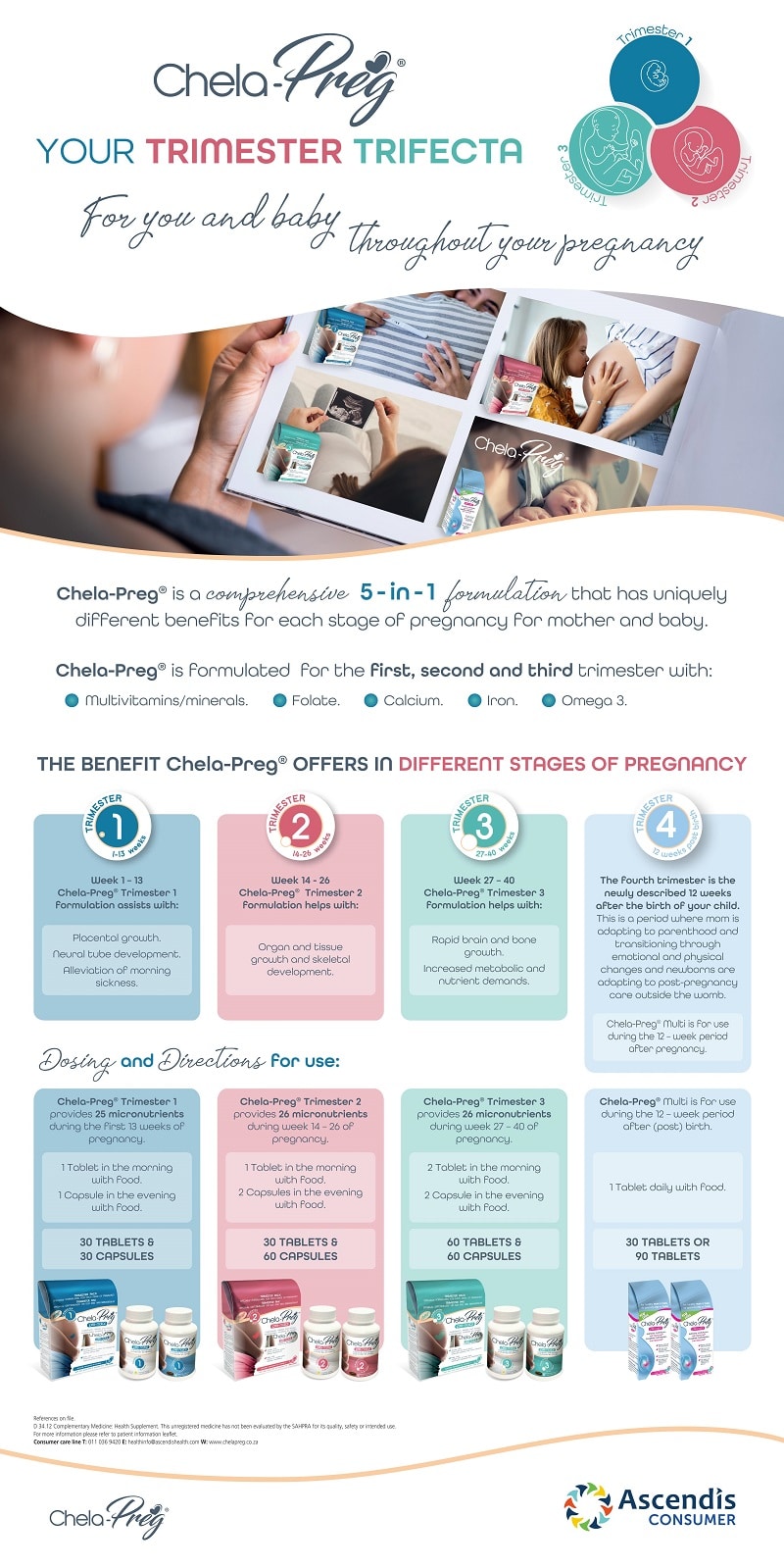
During pregnancy, the nutritional requirements differ considerably from those of non-pregnant women.1e Vitamins, minerals, and omega-3 fatty acids play an important role during pregnancy: ensuring the appropriate progress of a normal pregnancy to support the mother through the common discomforts or to prevent pregnancy complications.
VITAMINS AND MINERALS REQUIRED DURING PREGNANCY & BREASTFEEDING
Back to topAn adequate supply of omega-3 DHA and the following micronutrients are particularly important in pregnancy.
- Calcium
- Iodine
- Iron
- Magnesium
- Vitamin A
- Vitamin B9 (folate, also known as folic acid)
- Vitamin B6 (pyridoxine)
- Vitamin C
- Vitamin D3 (Cholecalciferol)
- Vitamin E
- Zinc
LONG-TERM BENEFITS OF PRENATAL SUPPLEMENTATION IN LATER CHILDHOOD
Back to top
PREGNANCY COMPLICATIONS DUE TO NUTRIENT DEFICIENCIES
Back to topWhat can happen when your dietary routine lacks these nutrients?
Insufficient maternal nutrient intake has the potential to adversely affect many developmental processes in the fetus and the breastfed infant, with both immediate and longer-term effects.
Folate deficiency can be responsible for neural tube defects (NTD), including spina bifida and brain deformities.
Other nutrient deficiencies can lead to:
- Pregestational diabetes
- Pre-term delivery
- Low birth weight
- Fetal growth retardation
- Birth defects
- Impaired neurodevelopment and cognition
HOW TO PREVENT NUTRIENT DEFICIENCIES
Back to topThe nutritional needs of pregnant women can be adapted and achieved by introducing daily supplementation to their dietary routines. Multiple micronutrient supplementation during the critically important biological period of pregnancy is considered an effective strategy to achieve an optimized micronutrient status.
Micronutrient supplementation should always be combined with the consumption of a well-balanced diet.
WHY IS ADDITIONAL MICRONUTRIENT SUPPLEMENTATION NECESSARY DURING PREGNANCY AND BREASTFEEDING WITH A WELL-BALANCED DIET?
Back to topPregnancy requires a healthy diet that includes an adequate supply of energy, protein, vitamins, and minerals to meet the increased needs of the mother and the fetus. However, for many pregnant women, dietary intake of fruits, vegetables, meat, and dairy products is often insufficient to meet these needs and can lead to micronutrient deficiencies.
Even in developed countries, where a balanced diet is accessible, micronutrient inadequacies are common due to a general switch to high-fat and low-quality diets (e.g., in highly processed products rich in salt, sugar and saturated fats), with the frequently suboptimal intake of general vitamins and minerals.
References available on request

Pre-and Postnatal Supplementation

Pre-and Postnatal Supplementation

Pre-and Postnatal Supplementation
Pre-and Postnatal Supplementation

Pre-and Postnatal Supplementation