
The hormone changes associated with menstruation produce a variety of emotional, behavioural and physical effects.
These vary in duration and intensity from a few hours to 14 days and from mild to severe.
Most women experience fairly mild symptoms but for moderate to severe sufferers, PMS can have a significantly negative impact on their quality of life.
SIGNS AND SYMPTOMS
Back to top
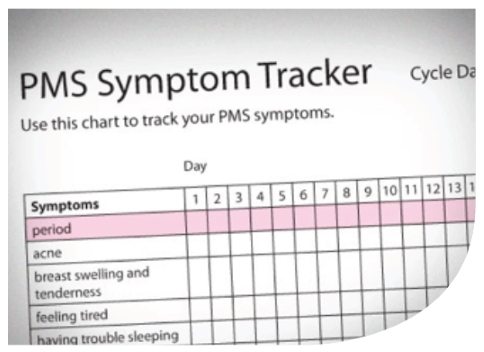
- Emotional Behavioural Physical
- Mood swings Appetite changes Breast fullness
- Irritability or anger Food cravings Headache
- Depression Poor concentration Abdominal bloating
- Tension or anxiety Insomnia Weight gain from fluid retention
- Social withdrawal Acne flare-ups
- Fatigue
- Constipation or diarrhoea
- Cramping in lower abdomen and / or back
CAUSES AND RISK FACTORS
Back to topWhile the cause of PMS is not clearly understood, it may be described as the result of multiple factors such as:
HORMONES
During your menstrual cycle hormones thought to be the biggest factor contributing to many of the PMS symptoms fluctuate.
CHEMICALS IN THE BRAIN
Hormone fluctuations may affect certain chemicals in your brain. One such chemical is serotonin, which helps to regulate moods.
LIFESTYLE
Lifestyle choices such as diet, stress, lack of exercise and weight gain may increase your risk of PMS.
PSYCHOSOCIAL
Environment, relationships, self-esteem, stress and depression may also increase your risk. In fact, if you are already a PMS sufferer, increased age and stress may worsen your condition.
PMS PREVENTION
Back to topYou cannot prevent PMS but you can reduce the severity of your symptoms by introducing healthy lifestyle habits:
- Eat healthy foods
- Exercise regularly
- Stop smoking
- Drink plenty of water
- Get 6 – 8 hours of sleep per night
- Reduce / manage stress levels
HOW PMS IS DIAGNOSED
Back to top
TYPES OF PMS
Back to top- Mild: Does not interfere with personal/social and professional life.
- Moderate: Interferes with personal/social and professional life but still able to function and interact.
- Severe: Unable to interact personally/socially or professionally – withdraws from social and professional activities.
PMDD (PREMENSTRUAL DYSPHORIC DISORDER):
Back to topSevere PMS (USA Institutes)
Mild PMS is self-treatable but more severe PMS symptoms may require medications that block the secretion of certain hormones. In extreme cases of PMDD (premenstrual dysphoric disorder) justified medical or surgical elimination of the menstrual cycle (removal of the ovaries) may be required.
In the case of emotional symptoms, such as anxiety and depression, you may require counselling. A qualified practitioner can help you to find ways to manage some of your symptoms.
USEFUL TIPS FOR COPING WITH PMS
Back to topIntroduce healthy lifestyle habits
Consult a healthcare practitioner
• Kumar, P. and Clark, M. (2009) Kumar and Clark’s Clinical Medicine. Ninth Edition. Edenburgh: Saunders Elsevier. • Martini, H. M. (2004) Fundamentals of Anatomy & Physiology. Illustrated Sixth Edition. Pearson Education, Inc., as Benjamin Cummings. • O’Brien, P.M.S. (1993) Education & Debate: Helping women with premenstrual syndrome. British Medical Journal: Volume 307: 1471-5 • Stedman, T. L. (2008) Stedman’s Medical Dictionary for the Health Professionals and Nursing. Illustrated Sixth Edition. Philadelphia: Wolters Kluwer Health Lippincott Williams & Wilkins. • Berger D. et al., (2000) Archives of Gynecology and Obstetrics. 264: 150-153. • Schellenberg, R. (2001) Treatment for the premenstrual syndrome with agnus castus fruit extract: prospective, randomized, placebo controlled study. British Medical Journal. 322: 134-7. • Schellenberg, R. et al., (2012) Dose-dependent efficacy of the Vitex agnus castus extract Ze 440 in patients suffering from premenstrual syndrome. Phytomedicine. 14:1325-1331.

Premenstrual Syndrome PMS

Premenstrual Syndrome PMS

Premenstrual Syndrome PMS
Premenstrual Syndrome PMS
Premenstrual Syndrome PMS